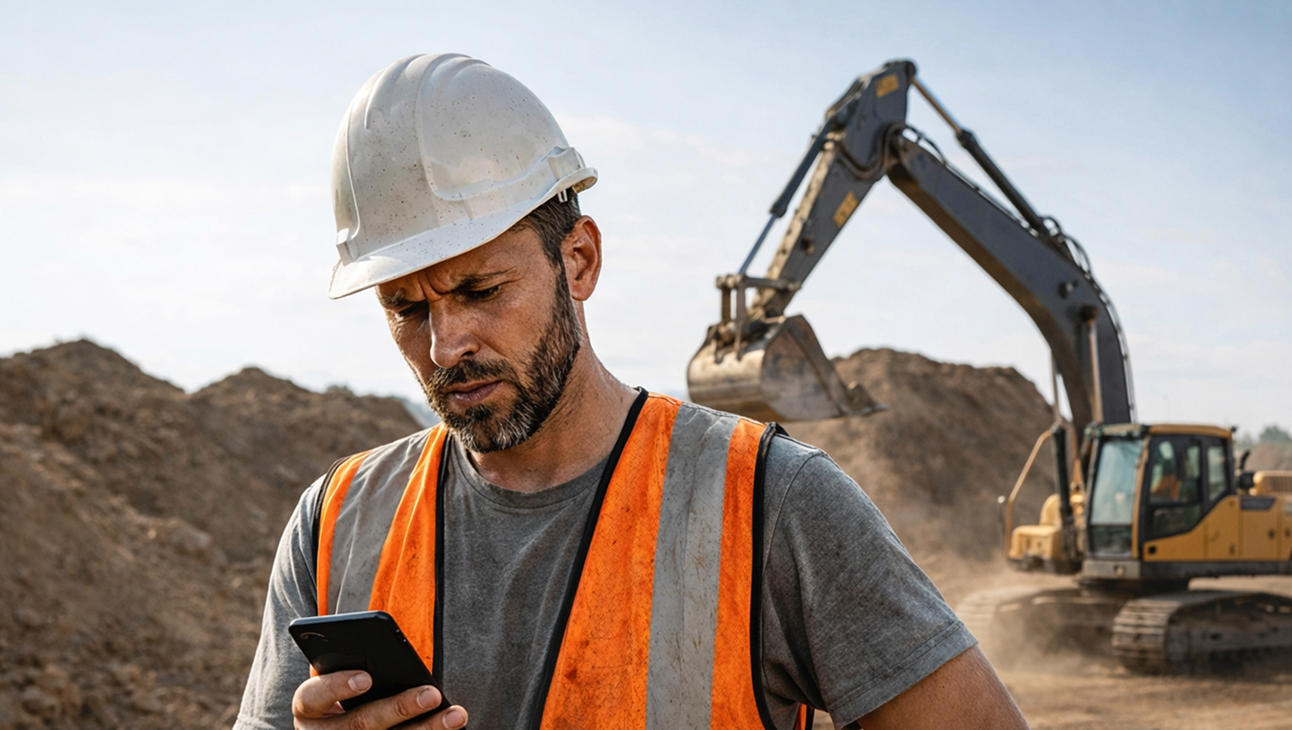
When contractors talk about what frustrates them most about dealer service, the complaints tend to cluster around two things: wait times and communication. You might expect the first one. The second one — the silence, the missed callbacks, the vague “we’re working on it” updates— is where dealers quietly hemorrhage customer loyalty every single day.
And the data backs it up.
J.D. Power has been measuring dealer service satisfaction for decades, and their findings are hard to argue with. Among the ten most influential factors in service satisfaction, four are directly tied to communication: completely focusing on customer needs; keeping the customer informed of service status; the service advisor immediately meeting with the customer upon arrival; and following up after service to ensure satisfaction. That’s nearly half the satisfaction equation tied to how — and how well — a dealer communicates.
And dealers are still getting it wrong. Greeting customers immediately upon arrival, one of the most basic communication touch points, occurs only about half the time.
While J.D. Power’s primary focus is the automotive segment, the patterns are instructive — and the construction equipment world operates with even higher stakes.
In construction, a machine sitting in a service bay with no status update isn’t just annoying — it’s a financial event. The term everyone uses to describe when a machine is headed to the dealer’s shop: “the black hole”. No wonder customers much prefer work to be completed in the field as they can have eyes on the machine.
Unplanned downtime rates of 20 to 30 percent are not uncommon in the construction industry. When that dozer or excavator goes down unexpectedly, the damage isn’t just the repair bill. A company with 50 pieces of equipment running at 30 percent unplanned downtime could be looking at an annual loss of $2 million. For a contractor with 200 assets, that number can reach $8 million.
When a contractor has no visibility into when their machine is coming back, they can’t plan. They can’t redirect crews, can’t commit to project timelines, can’t make smart rental decisions.The silence from the service department doesn’t just feel bad — it directly multiplies the cost of the downtime itself.
Research specific to the heavy equipment dealer sector reinforces what contractors already feel in their gut. Parts issues, staff knowledge, and customer service represent 77 percent of all negative comments in equipment dealer satisfaction surveys — and when price shows up as a complaint, it almost always includes a reference to parts, service, and mismanaged communication.
That last piece is important: price sensitivity often isn’t really about price. It’s about feeling like you didn’t get what you paid for — and poor communication makes every bill feel like an overpayment.
An average of 32 percent of customers who leave negative comments about their experience become lost customers within the next 12 months. That’s roughly one in three unhappy customers walking out the door permanently — not because the repair was bad, but because the experience around it was.
For construction customers specifically, this matters even more. A project superintendent isn’t sitting at a desk waiting for the phone to ring. They’re on the job, moving. A quick text update —“your machine is diagnosed, part ordered, estimated return Thursday” — is worth more to that person than a voicemail they won’t hear until lunch. But the reality most construction customers have learned is: they are the ones who have to chase down the information. Call multiple people to hopefully get someone on the phone. Email a bunch of people. When there’s nothing, a customer always assumes the worst: no one is working on your problem.
Here's what makes the communication failure in heavy equipment service particularly hard to excuse: the data is already there. Machine health information flows through telematics platforms in real time. Fault codes, hours, fluid levels, system alerts — dealers can see it. Many contractors can see it too.
But seeing it and acting on it are two different things. Technology alone was never going to fix this. The real problems are process failures, lack of accountability, and poor leadership — and no software dashboard changes any of that. What the industry actually needs isn't more data. It's a system built around doing something with it, fast, and communicating that back to the customer. That's a different problem entirely.
The contractors who feel ignored by their dealers don't leave because they want to. They leave because they ran out of patience. And patience runs out fastest not when the repair takes time, but when nobody bothers to explain why.
For a long time, dealers didn't have to care. Being the only game in town has a way of making communication optional. But that monopoly on service is eroding — qualified independent mechanics are easier to find, and platforms purpose-built around speed and communication are changing what contractors expect and what they'll settle for.
The tide is turning. And Heave is the wave.
Heave provides same-day heavy equipment field service through a nationwide network of vetted, independent technicians. Get a tech today at heaveapp.com.
